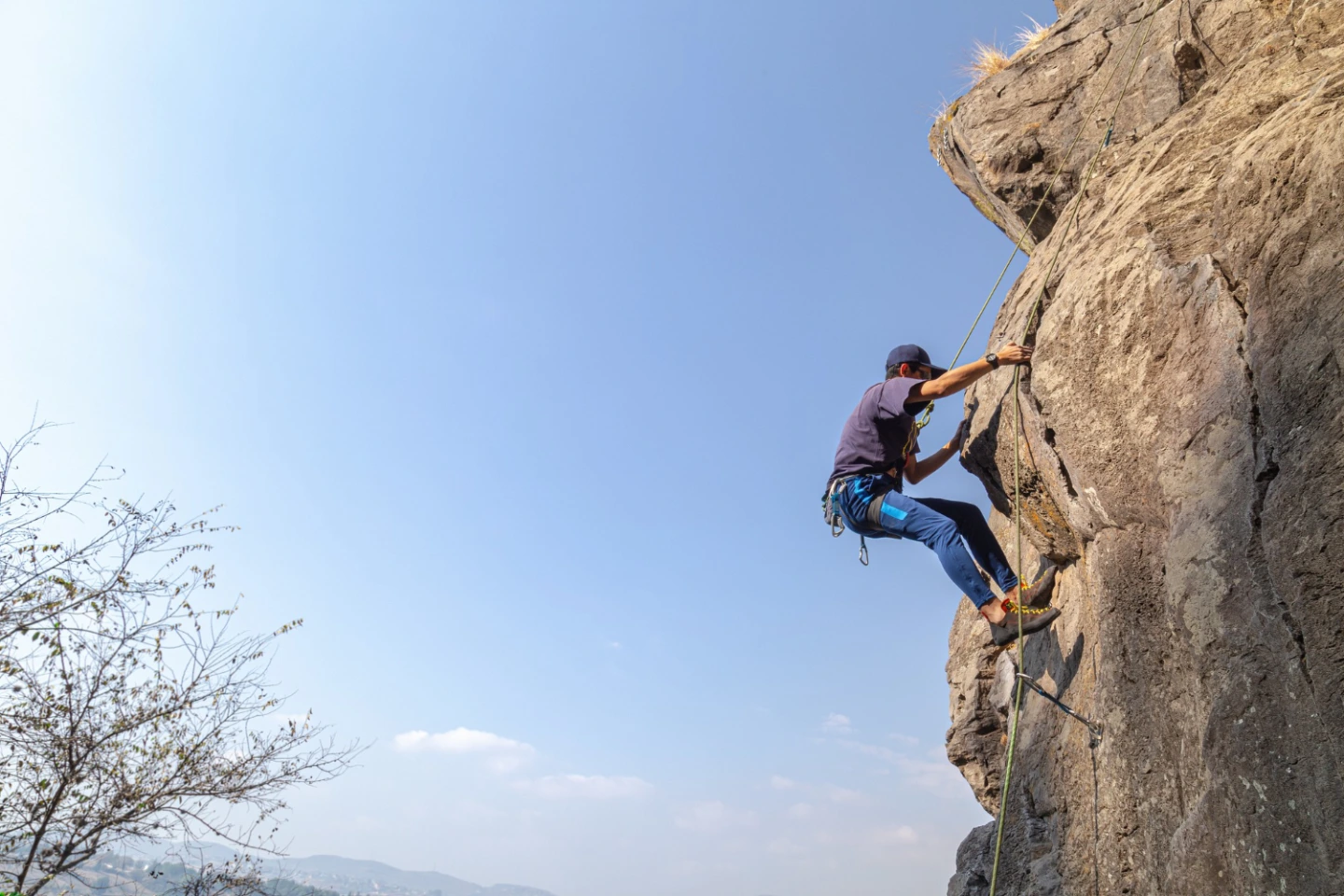
Ascenders can simplify your tasks on the mountain. They can assist you with juggling fixed lines, moving through glaciers, or even pulling yourself out of a crevasse zone—anywhere that requires strenuous effort. Having the right equipment makes a lot of difference. With a reliable Petzl ascender, you can trust yourself to move upward more easily and with control.
But here’s the deal: even the best pieces of equipment can cause problems if you use them the wrong way. Let’s discuss some of the common mistakes made with ascenders and how you can avoid them.
Mistake #1: Trusting Your Ascender Like It’s a Lifeline
One of the easiest traps to fall into is assuming your ascender will catch you if you mess up. Spoiler alert: it won’t.
Ascenders aren’t built for catching falls—they’re for controlled, steady upward movement on a rope that’s already anchored. If you slip and shock-load that rope, the cam could slip, disengage, or just shred the sheath.
Too often, climbers tie into a fixed rope and lean their whole weight and safety on a single Petzl ascender, with no backup. That might work for a while… until it doesn’t.
You need backups—every time. Add a prusik knot. Clip in with a cows tail. Use redundancy like your life depends on it—because it does.
Mistake #2: Pairing It with the Wrong Rope
Not all ropes and ascenders get along. And mismatching them is a mistake that’s easy to overlook.
Each Petzl ascender is designed for a specific rope diameter range—usually something like 8 to 13 mm. Stray outside that, and the cam might not grip right. Too thin? It could slip or fail to lock. Too thick? It might not feed properly, or worse, jam mid-climb.
And don’t forget about rope condition. Wet, icy, fuzzy, or sun-damaged ropes behave very differently from fresh, dry ones. Before climbing, ask yourself:
- Is the rope in good shape?
- Does it match my ascender specs?
- Am I forcing something that doesn’t feel right?
If something feels off, stop and sort it out before leaving the ground.
Mistake #3: No Backup? That’s a Gamble.
Let’s talk about one of the most common—and risky—habits: using just the ascender without any kind of backup. It feels tempting, especially when you’re confident or in a rush. But skipping backups is one of those decisions that works great… until the moment it doesn’t.
Climbers should always have:
- A prusik knot beneath the ascender
- A separate tether to the rope or anchor
- A habit of clipping into solid protection if there’s any fall potential
Even the most dependable Petzl ascender is a mechanical device. And mechanical devices? They can fail. Don’t give gravity an invitation.
Mistake #4: Mounting Your Foot Ascender All Wrong
Used properly, a foot ascender can save your arms and make climbing fixed lines way less exhausting. Used poorly? It becomes a frustrating ankle ornament.
The most common mistakes:
- Placing it too high or too low on your boot
- Letting the rope run at an awkward angle
- Pulling yourself up with your arms instead of standing tall and letting your legs do the work
The whole point of using a foot ascender is to let your strongest muscles—your legs—do the lifting. So don’t make them fight against poor body position. Stand upright, stay centered over the rope, and move smoothly. You’ll notice a big difference in energy and efficiency.
Mistake #5: Ignoring Gear Maintenance
Dirt, sand, snow, and cold temperatures are not kind to your gear, especially devices with moving parts like ascenders. If you’re tossing your Petzl ascender into your pack at the end of each day without checking it, that wear and tear will catch up with you.
Make it a habit:
- Wipe down cams and moving parts after use
- Check for buildup of ice or grime
- Open and close the cam a few times before your next climb
A sticky cam or worn teeth can cause slippage on the rope. And that’s not something you want to discover when you’re 30 meters up.
Mistake #6: Clipping Into the Wrong Spot
It happens. You’re tired. You’re distracted. And without thinking, you clip your ascender to a gear loop instead of your harness’s tie-in point. That’s a mistake you can’t afford.
Always clip your Petzl ascender into a load-bearing point on your harness—preferably your belay loop. Use a locking carabiner. Double-check it’s not cross-loaded or twisted.
It takes 10 seconds to make sure your setup is solid, and those 10 seconds could save your life.
Mistake #7: Trusting Sketchy Fixed Lines
Sometimes, you don’t have control over the rope you’re ascending, like on alpine or expedition routes with pre-fixed lines. Still, it’s your responsibility to assess what you’re climbing on.
Watch for:
- Frayed sheaths or signs of UV damage
- Mushy or flattened sections of rope
- Ice or water running over the rope
Even if your ascender is top-notch, if the rope fails, you’re in trouble. If you’re at all unsure, back it up with your own rope or use a friction hitch in addition to the ascender. Better cautious than airborne.
Mistake #8: Rushing the Process
It’s tempting to power up the rope as fast as possible, especially when the wind picks up or your partner’s already above you. But ascenders work best with smooth, steady movement.
If you rush:
- You’re more likely to jam or misfeed the rope
- You might forget to reset your foot ascender or check the cam
- You increase your chance of making simple errors that can lead to big problems
Climbing smart isn’t about moving fast—it’s about moving well. Find your rhythm. Use your legs. Breathe. You’ll get there faster than you think, and with less effort.
Mistake #9: Using Ascenders Where They Don’t Belong
Last but not least, ascenders aren’t magic. They don’t belong in every situation.
Slabby rock? They’ll slip. Low-angle snowfields? You might as well be dragging a rock. Sketchy traverses? Bad idea.
Know when to switch to another tool or method. Ascenders are made for vertical progress on tensioned ropes. If you’re unsure whether they’re right for a section, stop and rethink your system. That kind of awareness can make or break your day.
Be Good to Your Gear—And Yourself
In any activity, there is always an element of trust: trust in your partners, judgment, and gear. When used properly, ascenders like the Petzl ascender work well for the user. However, good habits, clear thinking, and sound techniques cannot be bypassed.
With a foot ascender, you can conserve your strength. Perform gear maintenance. Put backup systems in place. Verify the systems. Most important of all— be in the moment, slow down.
The goal is not to speed to the summit. Rather, the aim is to keep returning by climbing at your own pace along the way, always smarter, always with strong decision-making, and a clear mind.