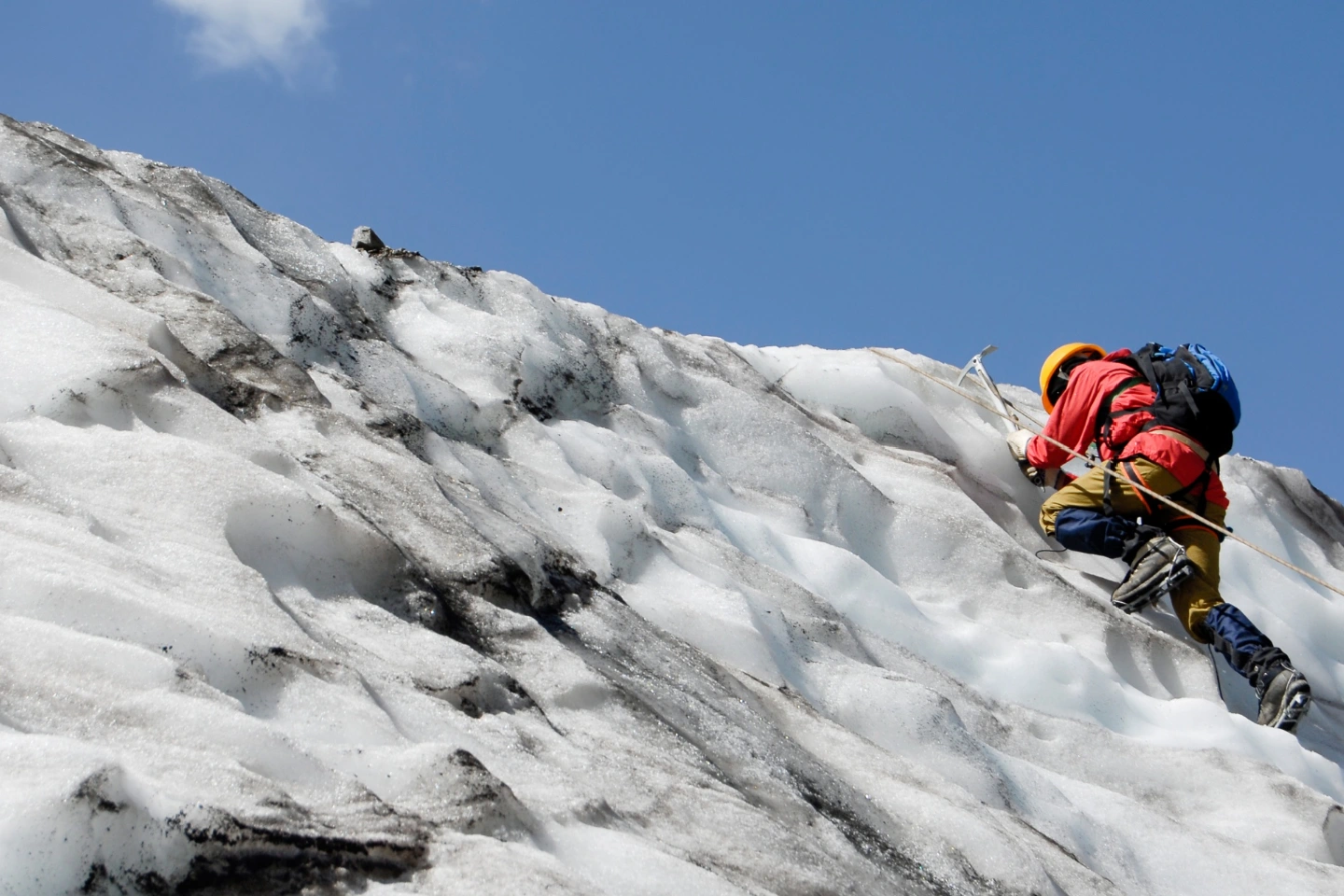
When preparing to tackle steep ice or mixed terrain, having the proper climbing gears is more than simply helpful; it’s essential. Whether you’re swinging into a frozen waterfall or edging over an icy rock, dependable climbing equipment helps elevate your performance, guarantees your safety, and enables you to focus on the actual climb instead of your pack.
Technical Ice Axes and Ice Tools
Technical ice and mixed climbing are not your average walking axes. They’re shorter, sharper, and built to bite into bulletproof ice with precision. Most climbers carry two, and once you try them, you’ll understand why
Some models have curved shafts for better clearance, while others offer interchangeable picks for different terrain. If you’re venturing into mixed routes, you’ll want tools that can hook rock edges and hold on. This set of climbing tools is designed to complement your arms, so you would be picking ones that are perfectly balanced and feel weightless in your firm grip.
Crampons: Choosing the Right Style and Fit
Your crampons are what keep your feet glued to steep ice. Sounds simple, but not all crampons work the same. If you’re climbing vertical ice or tackling mixed terrain, mono-point crampons are best. They give you more precision and control on tiny holds and narrow ice columns.
Here are a few things to keep in mind:
- Material: Steel is durable for ice. Aluminum is lighter for alpine approaches.
- Fit: Make sure they’re compatible with your boots—no exceptions.
- Anti-balling plates: These prevent snow from clustering underneath.
The key is to get a pair that matches your boots and your climbing goals. Crampons that don’t fit properly can be hazardous as well as unnerving emotionally.
Ice Screws and Protection Devices
When you’re placing protection on a vertical sheet of ice, speed matters; good ice screws grip quickly, thread smoothly, and keep your hands off the cold for as little time as possible. Newer designs with fold-out handles make this even easier.
A smart rack might include:
- A few long screws for solid placements
- Some short screws for thin ice
- A V-thread tool for building anchors
On mixed routes, don’t be afraid to carry a few rock pro pieces too. Your protection setup should be light, but versatile enough to adapt when the ice gets thin or the rock takes over.
Specialized Harnesses and Racking Systems
If you’ve ever tried to clip an ice screw while your harness is buried under three jackets, you know how important design is. Ice climbing harnesses are built to be worn over bulkier clothing, with leg loops that adjust easily and reinforced gear loops that hold all your screws and quickdraws.
Look for:
- Ice clipper slots (those plastic carabiners you can rack screws on)
- Padded waist belts for long belays
- Easy-to-use buckles you can manage with gloves on
With everything in the right place, you’ll spend less time fumbling—and more time climbing.
Helmets Designed for Icefall Hazards
Compared to most other activities, ice climbing has a lot more potential overhead risks. A slipping tool, a stray gear, or even falling ice can result in a serious injury. In such scenarios, a lightweight helmet makes all the difference.
Modern helmets are well-ventilated, protective, and light, which is a great combination for any climber. Foam helmets specifically excel at absorbing impacts. Additionally, you will definitely want clips to secure headlamps for the extremely early and late starts and finishes.
It’s one piece of climbing equipment that should never stay at home.
Belay Devices Suitable for Cold and Wet Conditions
Ropes can get wet, frozen, or both on cold climbs, and that can mess with how your belay device works. That’s why it’s important to pick a device that functions reliably in winter conditions.
Options include:
- Assisted-braking devices for lead climbing
- High-friction modes for better control during rappels
- Devices that handle twin or half ropes
The goal is always control. Wet ropes are harder to manage, and your hands are colder than usual. The right device gives you confidence every time you lean back.
Approach and Mountaineering Boots
Getting to the base of your climb can be just as grueling as the climb itself. Snowy trails, icy scree, and mixed terrain demand boots that are stiff, warm, and crampon-compatible.
What to look for:
- Insulation to keep your toes warm on the belay
- Rigid soles for front-pointing
- Waterproofing that holds up in slushy conditions
For longer trips, double boots offer extra insulation and the option to dry your liners overnight. If your feet are miserable, your climb will be too, so don’t cut corners here.
Gloves and Hand Protection for Dexterity
Ask any ice climber, and they’ll tell you: gloves can make or break your day. Cold fingers don’t place screws, manage ropes, or swing tools very well. That’s why most climbers bring multiple pairs.
A solid glove strategy includes:
- Thin gloves for climbing—dexterity is key
- Heavier gloves or mitts for belaying or resting
- Backup pairs in case one gets soaked
The right gloves give you grip without stiffness, and warmth without bulk. You’ll probably end up with a collection, because no single pair does it all.
Avalanche Safety Equipment
If your route starts with an alpine approach or a backcountry ascent, you need avalanche gear. This isn’t just for skiers. Snow conditions change fast, and terrain traps don’t care what sport you’re doing.
The basics:
- Avalanche transceiver
- Shovel
- Probe
But carrying them isn’t enough—you have to know how to use them. Take an avy course. Practice with your gear. Read the forecasts. No amount of climbing gears will save you if you’re not prepared for what’s beneath your feet.
Master the Climb with the Right Gear
Make sure each item in your pack meets a specific goal. For ice and mixed climbing, having the appropriate tools can help increase safety, confidence, and performance, making things like technical ice axes, crampons, warm gloves, and even avalanche tools crucial to your success. They enable climbing trust and ensure you are prepared for any challenges that come your way.
Before aiming for a vertical terrain, check if your climbing tools are dependable. If yes, only then are you prepared to face the challenges of a climb.