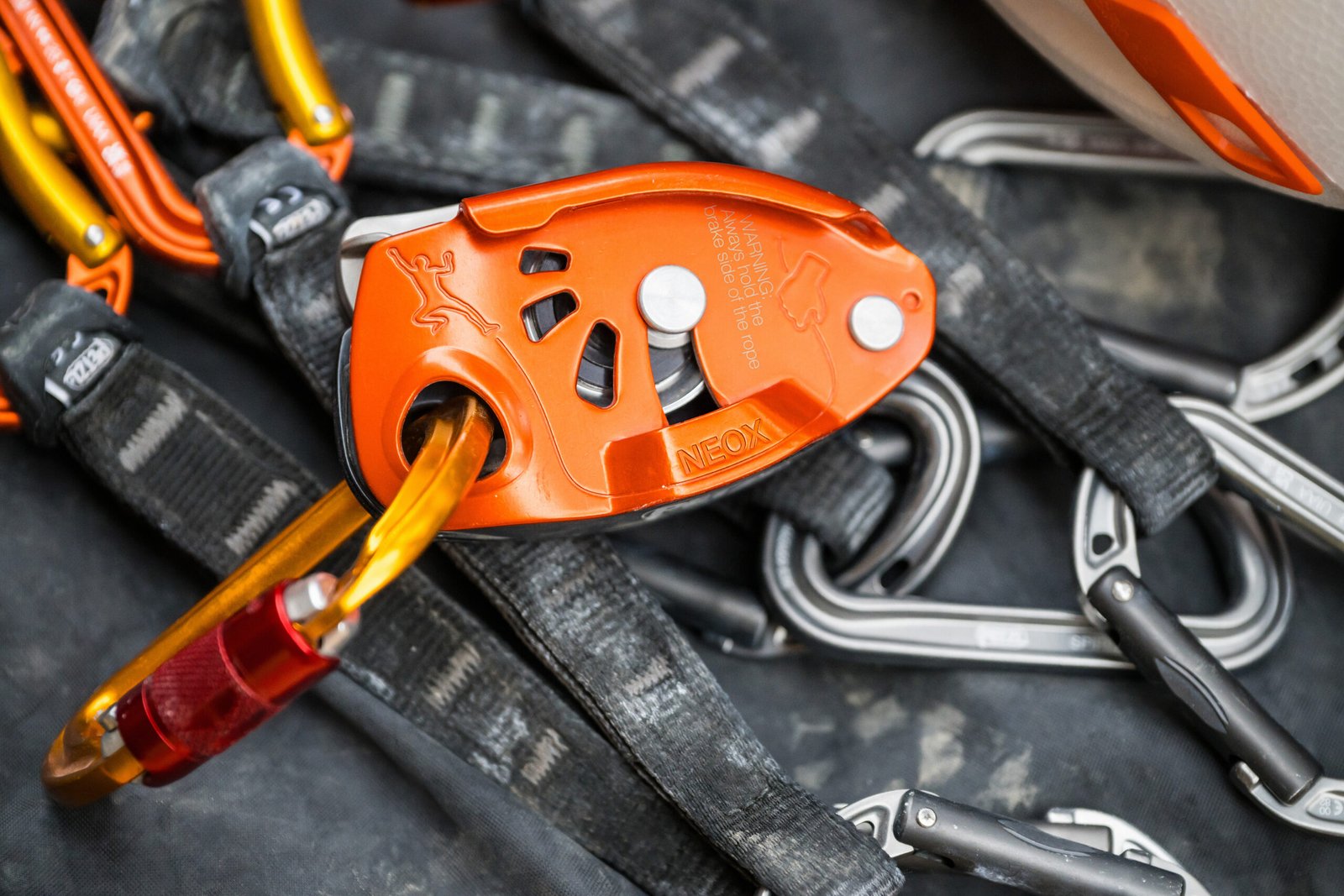
Introduction
When it comes to climbing, it’s not just about strength or bravery—it’s also about making suitable gear choices. Have you wondered which is the one piece of gear that shows up in nearly every part of a climber’s kit? The carabiner. You can notice it on harnesses, at anchors, in quickdraws, clipped to ropes, and holding together the entire setup. For such a small item, it plays a noticeable role in your safety and comfort.
Choosing one requires careful preparation and a thorough understanding of your needs. From understanding what a carabiner does to knowing when to pick a hook carabiner or how to shop for sport climbing quickdraws, this blog will provide answers to all your queries.
What Is a Carabiner and Why Does It Matter
A carabiner may look like a simple metal clip, but in climbing, it’s one of the most essential pieces of gear you’ll ever use. It consists of a lightweight metal loop with a gate that opens and closes. It’s built to hold thousands of pounds of force when used correctly. The reason why it is so critical to consider is its versatility. You can use it to:
- Attach yourself to the rope or anchor
- Secure gear to your harness
- Connect protection pieces like cams and nuts
- Clip quickdraws on a route
- Keep your belay device in place
There are many types of carabiners, and each has a specific use. A hook carabiner is a more specialized piece, often used in aid climbing, gear retrieval, or rigging tasks. It’s a small hooked nose that lets you hook gear or clip into tight spots.
Key Carabiner Features to Consider
Understanding these key features of a carabiner can make all the difference. Here are some features to focus on during selection:
Shape
A carabiner’s shape influences several aspects, including stress management capabilities and grip. Some shapes are suitable for all-around purposes, while others are specialized for specific applications, such as anchors or belay devices.
- The shapes are designed to ensure that loads are shared evenly on the strongest end of the carabiner.
- The others are more open, allowing for easy usage with ropes or gloves.
- In making a rack of quickdraws, the profile of the rope affects not only how well it slides through but also how easily it can be clipped.
Gate Type
The gate is the movable part of the carabiner that opens and closes to allow attachment or removal of gear. There are a few common gate types:
- Straight gates are simple and strong, often used on the bolt-end of quickdraws.
- Bent gates are curved to help guide the rope more smoothly, making them ideal for sport climbers.
- Wire gates are lighter, resist freezing in cold conditions, and reduce the risk of gate flutter.
- Locking gates add security, perfect for belay setups or anchor points.
Size and Weight
There are lightweight carabiners, perfect when you have to scale on long routes, and don’t want to carry an extra burden. Some carabiners are larger, with additional space, making them easier to handle.
- You can find lightweight carabiners on alpine and traditional climbs.
- The heavier ones are more stable and easier to hold, and are suitable for beginners or at the gym.
- Choosing the correct size of the carabiner is all about what is comfortable and durable for you.
Strength
All climbing-rated carabiners meet baseline safety standards, but the strength can vary depending on size, gate type, and how the load is applied.
- If the load shifts or cross-load limits, it weakens the carabiner; therefore, the design and direction are crucial to its integrity.
- When using specialized gear like a hook carabiner, always make sure it’s intended for climbing loads, not just utility work.
Special Use Cases
Some carabiners are specifically designed for specific uses. For example:
- A hook carabiner may be used for aid climbing, tensioned systems, or gear retrieval, where a standard carabiner wouldn’t be effective.
- Sport climbing quickdraws provide smooth clipping action, snag-free noses, and ergonomic gates that handle repeated use on bolted routes.
When to Use Hook Carabiners
While most climbers are familiar with standard locking and non-locking options, hook carabiners have a unique design that gives them a particular role in climbing systems. They’re not something you’ll use every day, but when the situation calls for it, they offer a creative solution.
Hook carabiners are all about precision and access. They’re shaped to connect quickly, latch onto gear in tight spaces, or help you work with systems that need extra control. You won’t usually find them on sport climbing racks or belay setups. Here are a few times you might require a hook carabiner:
- When setting up temporary gear systems
- For clipping onto fixed lines in low-risk zones
- When managing gears on mid-route
- For light hauling or gear adjustments
- When removing or repositioning slack equipment
- In scenarios where a fast connect/disconnect is helpful
- During technical preparation before a climb
Carabiners in Quickdraws: What to Look For
Quickdraws are essential tools in any climber’s kit. The carabiners that come with it on both ends are the difference between a safe, quick, and smooth ascent. Their design and gate style can make a big difference in your performance, particularly when you’re on a mid-route and stretching to get that clip.
The top carabiner connects to bolts or gear placements. Each has a specific role, and selecting the right style for both makes a significant impact. Here are some features to focus on while choosing one:
- Look for gates that open easily but stay secure when closed.
- A clean, snag-free design is always helpful when unclipping.
- A steady grip can improve your clipping experience.
- Weight matters, but not at the cost of ease or safety.
- Try different styles to find what works best for you.
Matching Carabiners to Climbing Styles
Each climbing style demands something different. Some call for lighter gear, while others need stronger connections or quick and easy handling. That is why the correct choice of carabiner type is not a matter of choice but of the convenience of your climbing activity. Carabiners aren’t one-size-fits-all. What works for one style might slow you down or add unnecessary weight to another. Here are some quick examples of how different climbs benefit from different carabiners:
- For indoor climbing, keep it simple and strong.
- On long days outside, choose something light and durable.
- For lead climbing, choose gears that are easy to clip.
- In the case of multi-pitch routes, select gear with precise control
- In climbs that involve a lot of gear, make sure you keep your gear light and well-packed.
- For cold-weather trips, make sure it works well with gloves.
- In technical setups, choose equipment that offers accuracy and control.
Top Tips for Carabiner Safety and Maintenance
Carabiners are small but mighty tools in your climbing kit. They hold your gear together, help you clip in securely, and often carry the weight of your entire system. That’s why it’s essential to treat them with care. With the right habits, your carabiners can stay safe, reliable, and last a long time.
Check the Gate and Keep It Clean
Make it a habit to check your carabiners frequently. Check the gate during opening and closing. When it feels sticky, gently clean it to ensure no dirt is disrupting the mechanism.
Know When to Retire Your Gear
Ensure to take note of any apparent flaws, e.g., sharp edges, deep scratches, or misaligned gates. Some minor indications suggest that you should stop using that piece.
Avoid Dropping Carabiners on Hard Surfaces
Do not drop your carabiners on hard surfaces. Although they appear to be hard and powerful, hard surfaces can damage their quality.
Protect Your Gear from Harsh Elements
Avoid touching them with corrosive materials, e.g., chemicals, saltwater, or severe heat. In case they come into contact with harsh chemicals, wash and dry them quickly.
Conclusion
A good carabiner may be a minor aspect of your climbing experience; however, it can play a significant role in the protection and efficiency. When deciding which carabiner to use when belaying, assembling a set of sport climbing quickdraws, or picking up a hook carabiner for a technical construction, the key is understanding how each type fits into your expedition.
Are you looking for dependable climbing gear that works as hard as you do? Mountain Extreme offers a selection of climbing carabiners, fastenings, and accessories that are designed to work in the real world. As a beginner or a seasoned climbing professional, you will find quality equipment to your liking that reflects your preferences and climbing requirements.